
I ran 61.9 billion tokens through ChatGPT Codex between July and October 2026. Everything I paid OpenAI this year came to $797.19. $12.88 per billion tokens - subscription dollars per counted token of throughput, including re-reads of cached input.
This is a story about throughput. Spotting the opportunity was easy: during this case study, April through October 2026, OpenAI's $200 plan offered a concrete multiplier on the value of their other plans. Capitalizing on that multiplier was the hard part, because a better deal is only worth it when you use the excess productively. So how do you max it out, how do you measure that you really did max it, and how do you use that to build things that outlast the subscription? This is my answer to all three.
This wasn't tokens burned rewriting Moby Dick. In those months, with Codex as one of the main workers, my system shipped finished things:
- Books: a published nonfiction book, Canton Sea, and three published children's books, all on my books page.
- Animation and music: a 15-minute cartoon and four music videos of original songs, on my YouTube channel.
- Articles and novel experiments, including model benchmarks run across workload classes.
- An AI model routing index that decides which model gets which job.
- A 4-node local AI mesh that runs those jobs on my own GPUs.
- Games: a kids' learning arcade and a learn-to-code space fighter, plus other completed artifacts.
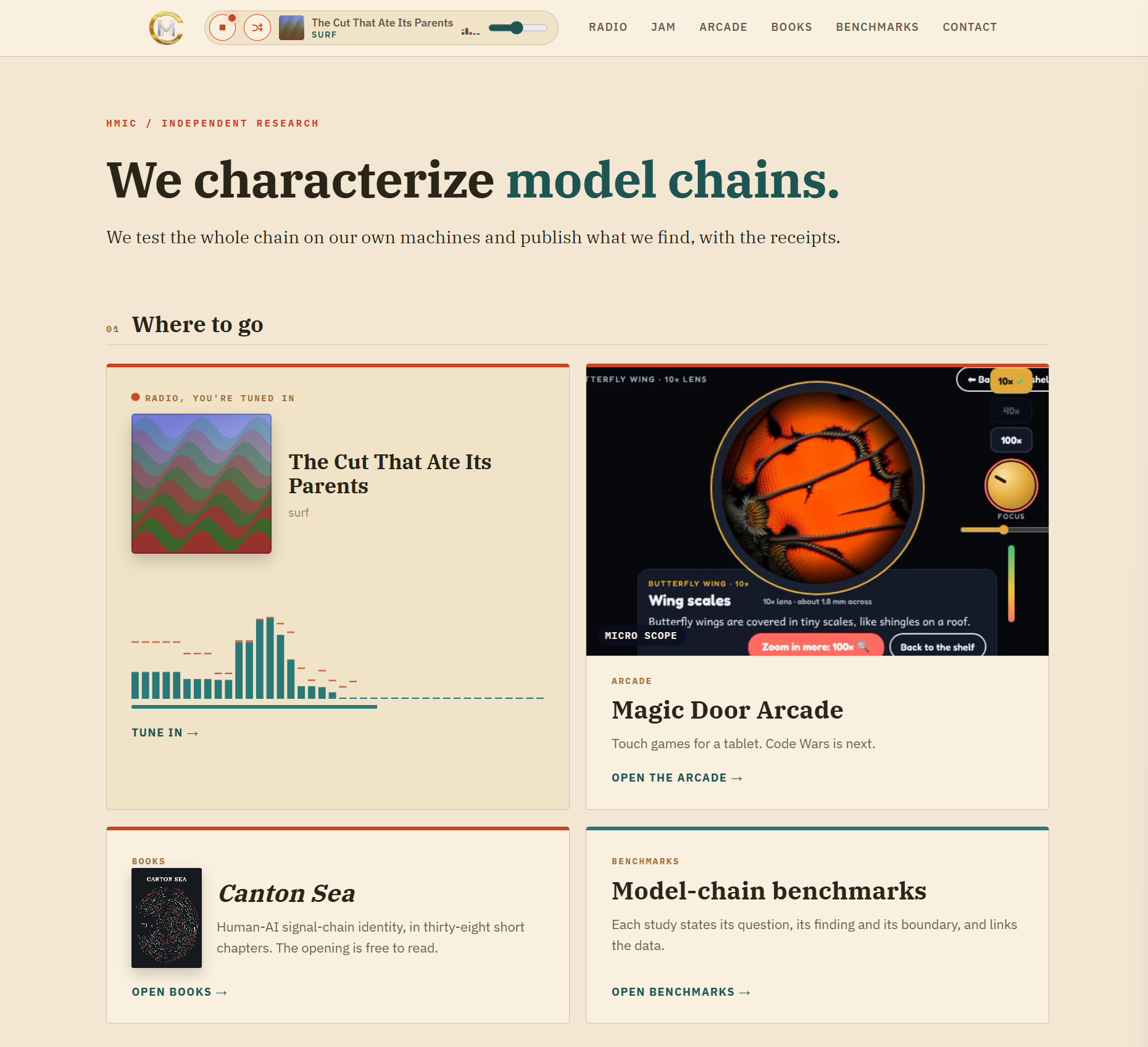
Where most of it lives: hmic.dev.
The finished work is why I paid for it. The ratio shows the scale of the workflow behind that work, and this week the ratio peaked. The study is complete: peak identified. If I cancelled right now, it would lock at that peak, and I don't expect another stretch of use heavy enough to beat it.
The arbitrage opportunity
The real key was the price ladder. Each step up costs money, but the steps don't buy the same amount:
| Step | Extra spend | Extra usage | Cost per 1x |
|---|---|---|---|
| Plus | first $20 | 1x | $20 |
| Pro 100 | next $80 | +4x (5x total) | $20 |
| Pro 200 | next $100 | +15x (20x total) | $6.67 |
| Pro 500 (from Sep 29) | next $300 | +5x (25x total) | $60 |
That was the ladder through October. The first $100 bought 5x. The second $100 bought 15x, triple the value of the first. Pro 500 arrived on September 29, and its extra $300 bought only 5x more, $60 per 1x. Nothing else on the menu came close, so I sat on the $200 rung and ran it as hard as I could.
It's the same reason I don't buy the half bag of fries for $4 when the full bag is $5. I just don't do it. If I want fries, I wait until I'm a little hungrier and get the full bag.
| Price | Cost per bag | |
|---|---|---|
| Half bag | $4 | $8 |
| Full bag | $5 | $5 |
The second half bag costs $1. Over a lifetime, that adds up. The second $100 of the Pro 200 plan was my extra dollar for the second half bag.
To be clear about what that means: one account, one person, me. I set out to do every bit of this on a single subscription of my own, within OpenAI's terms of service, using the plan the way it's sold. Codex is OpenAI's own agent product, included with ChatGPT plans and built for long-running work; nothing here went through an unofficial client or a scraped web chat. No API keys, no shared accounts, no workarounds. Just a lot of work.
Max it: how one person captures 61.9 billion tokens of work
Seeing a cheap rung is easy. Using it is the hard part, because one person typing into a chat box can't spend 4.2 billion tokens in a day. Every bottleneck between the plan and the work had to come out:
- You. A person can't keep up with a machine. Fix: write every job down once as a work order, like a ticket on the spike at a pizza counter, and let the workers run it without you.
- One job at a time. Fix: many workers in parallel lanes, each at its own speed, merged at checkpoints.
- The clock. Fix: long unattended runs. My longest single task ran 13 hours 43 minutes without me touching it.
- Trust. Volume is worthless if you have to check all of it yourself. Fix: a second model reads the important results before they count as done.
Without those, the cheap rung is just a bigger bill. With them, the limit is the meter, not me.
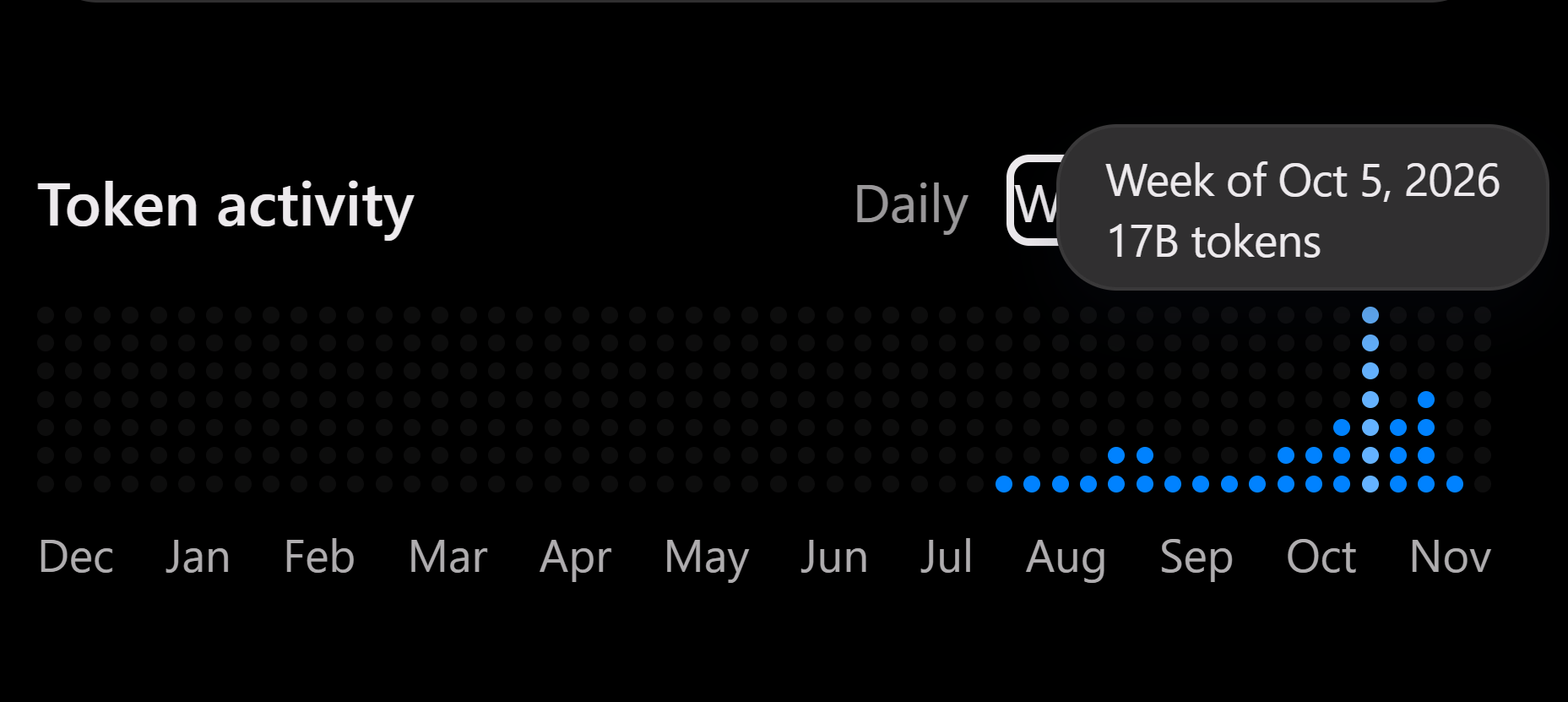
Then the rung moved. On September 10 OpenAI paused new Pro 200 sign-ups; reporting at the time quoted OpenAI's Tibo saying Pro 200 subscriptions "put the most strain on our systems." On September 29 the plan reopened at 10x instead of 20x, with existing subscribers keeping 20x through October 29. That set my October. With the arbitrage on its way out, I pushed harder still, used every free reset I was given, and at my October renewal dropped from $200 straight to $20. The 17-billion-token week of October 5 is that decision on a chart.
Measure it: the receipts
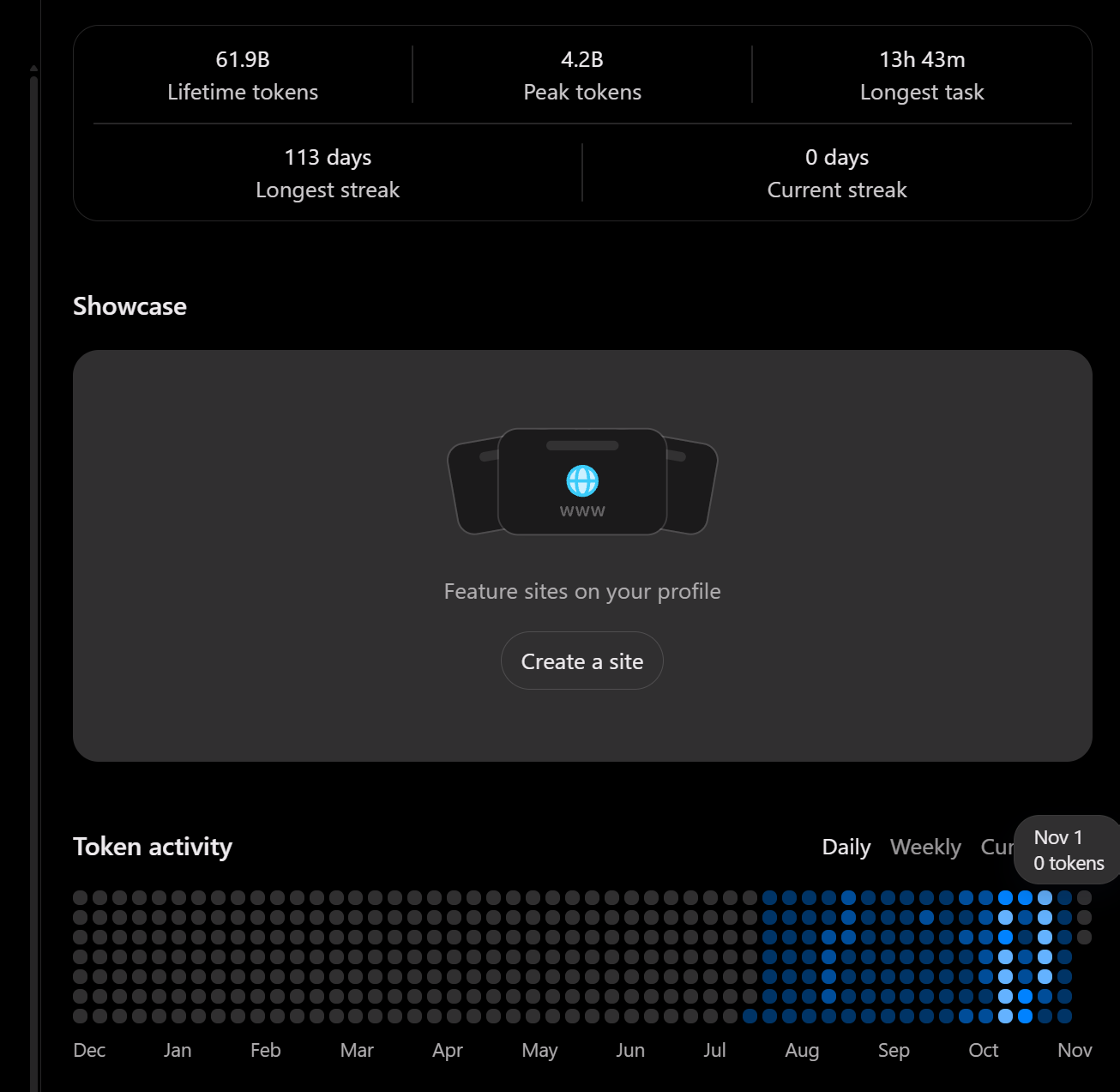
| Measure | Value |
|---|---|
| Lifetime tokens | 61.9B |
| Peak day | 4.2B |
| Longest single task | 13h 43m |
| Longest daily streak | 113 days |
| Total paid | $797.19 (Jan–Oct 2026) |
| Cost per billion tokens | $12.88 |
| Peak week (week of Oct 5) | 17B |
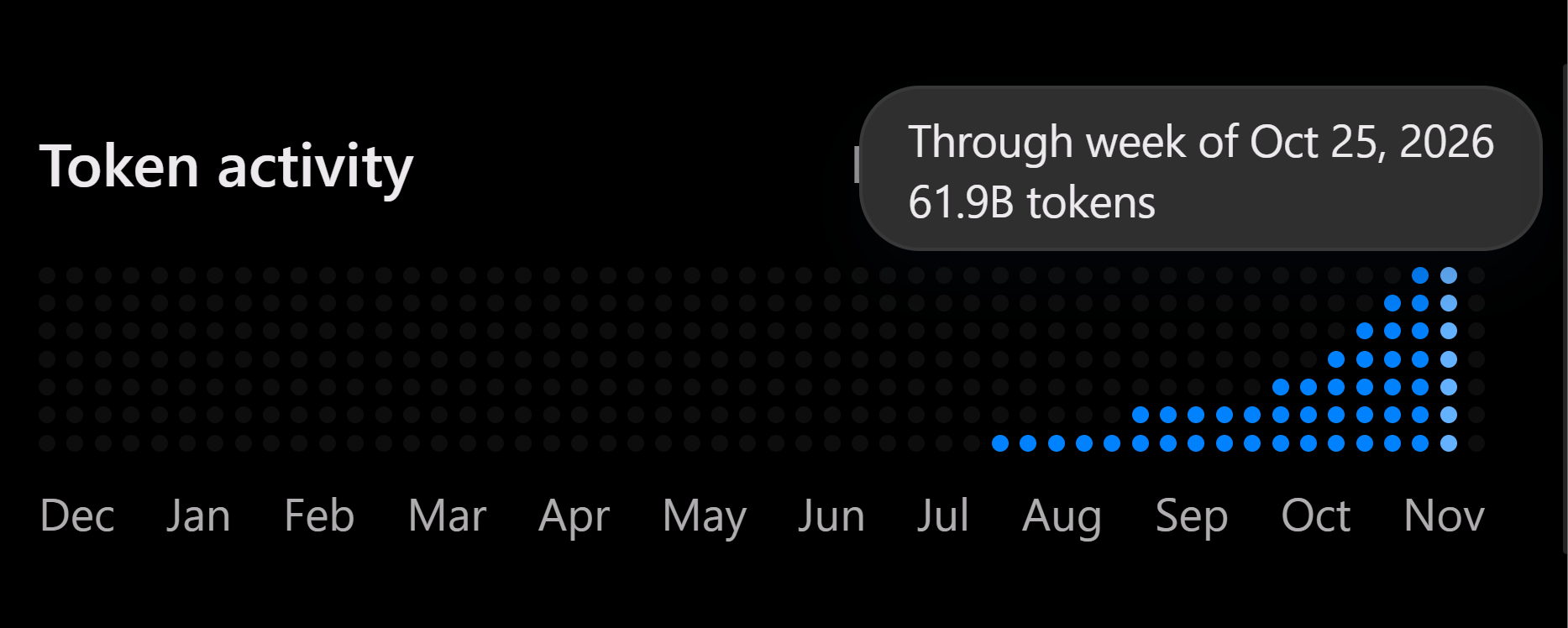
| Running total through the week of Oct 18 | 61.3B (99%) |
Every charge, straight from the billing page:
| Plan | Months billed | Paid |
|---|---|---|
| Plus | Jan–Jul (Mar free), Oct | 7 × $21.72 = $152.04 |
| Pro 100 | Jul 19 | $88.31 |
| Pro 200 | Jul 23 (prorated), Aug 23, Sep 23 | $122.44 + $217.20 + $217.20 = $556.84 |
| Total | Jan–Oct 2026 | $797.19 |
What the token number measures: counted throughput, mostly reused context. It adds cached input, fresh input and output together, so it shows the scale of the workflow, not how much finished text came out. The finished work is the list above.
My main PC keeps a log of every Codex session, so I can split the number. These 504 sessions cover 38.0 billion of the 61.9 billion; the other 23.9 billion is outside this PC's log. To count, I took the running total each session reports and summed only the change between updates, so nothing is counted twice.
Quick test before the table: out of 38 billion tokens, what share do you think was new material, and what share was the same context being sent again and counted as cached input? Think of your answer.
| Kind of token | Tokens | Share |
|---|---|---|
| Cached input (context reused from earlier calls) | 37.176B | 97.8% |
| Uncached input (not served from cache) | 0.761B | 2.0% |
| Output (incl. 23.1M reasoning) | 0.087B | 0.23% |
| Total | 38.024B | 100% |
Nearly all of it is long-running workers sending the same context again on each model call, where it's counted as cached input. Of the 86.7 million output tokens, 23.1 million were reasoning. The other 63.6 million are what the models actually wrote: code, documents, data, tool calls and the in-between replies along the way.
This was interesting to me in its own right. The number on my ChatGPT profile page is real, but in the sessions I logged, only a fraction of one percent is output from ChatGPT that I can actually see or use.
Here's the part I still can't pin down, even after measuring it and writing about it: how much those cached tokens count against a subscription. OpenAI's pricing page shows plan limits as estimated messages, not tokens. Its credit table prices cached input well below fresh input, but it doesn't say how cached tokens count against a plan. And if someone who logs every session can't say for sure, most subscribers won't even know there's a question to ask.
Don't read these numbers as typical. My system front-loads context on purpose: a full boot can load 20,000 tokens, or any amount I choose for that boot loader, and my own shorthand means a two-word reply from me can send the model off to read a stack of files to work out what I meant. Short commands for me, heavy reading for the machine. That trade is the whole design, and it pushes the read side far past what a normal workflow would show.
I leaned into this because it worked. My rule is flat-rate plans only, no API: a subscription is far cheaper per token than metered billing. But inside a subscription, usage still draws down the allowance with both my frontier providers, Anthropic and OpenAI, and more context means more usage. So the same rule held on both platforms: don't spend the allowance making a model read or think through anything it doesn't need to.
The simple version: "Read Moby Dick and describe it" costs the whole book in input. "Do you know Moby Dick?" costs a few tokens, and if the answer is yes, the model works from what it already carries. You still pay for what it writes, and anything it thinks through counts as output, but you skip paying for the book.
The chart tells the whole story: nothing before July, steady use through August and September, the brightest stretch in October, then dark. My current streak is zero because I stopped needing it, not because I forgot to log in.
The weekly view is sharper still. One week in early October carried 17 billion tokens, more than a quarter of the lifetime total. By the week of October 18 the running total was already 61.3 billion; everything after that added 0.6 billion. The work got done, and the meter stopped.
The same chart, read from the other side
I spent over a decade in business development, so I read the ladder the way a sales team builds it: around customer acquisition cost. Every row below is a hypothesis: my read, not anything OpenAI has said, and OpenAI doesn't publish its margins.
| Tier | Who it's for | My guess at the economics |
|---|---|---|
| Free | Most people. They need to taste it before they spend anything. | Loss leader. It carries the hype. |
| $20 | Low-frequency users: the people who join a gym on January 2 and stop going by March. Every major lab has this tier for a reason. | Thin margin, but profitable or break-even overall. |
| $100 | People who max out $20 and need more, but not a ton more. | Profitable for most. I'd guess the line is somewhere around 75% of the allowance, with headroom left to keep the bucket big. |
| $200 | Two groups: power users, and people who always buy the top package of anything. | The buyers who never max it are profitable. The power users are not, but they're worth it: people follow them to whatever tool they choose, because they tend to choose right. |
That's the hole in the armor. My guess is that every plan pays for itself except one: the $200 plan, maxed out. A subscriber running it flat out was likely expensive to serve (OpenAI's own "most strain" line points the same way), and all of the arbitrage sat in the second $100 of that plan.
If I can see the hole, so can they, and if the hole is real, they'll eventually close it. The September announcement looked like the first attempt.
I was on the $200 plan for one reason: the second $100 bought triple what the first did. When that rung was cut, the reason I was there was gone. I wrote this article on the $20 plan, and while fact-checking it I found out that on October 29 OpenAI had cancelled the cut. Every Pro 200 subscriber kept 20x, and Pro 100 and Pro 500 doubled, to 10x and 50x. That leveled the ladder: every Pro tier now costs about $10 per Plus-sized unit, so the second $100 buys exactly what the first does. It's a fair deal, no longer an arbitrage opportunity. I could go back, but Codex's final task was to make itself unnecessary to operating my day-to-day system.
| Plan | Usage after Oct 29 | Cost per 1x |
|---|---|---|
| Plus ($20) | 1x | $20 |
| Pro 100 | 10x | $10 |
| Pro 200 | 20x | $10 |
| Pro 500 | 50x | $10 |
My read of the bigger picture: the frontier labs are spending ahead of revenue to grow, and you can do that for years. What you can't do is lose money and lose customers at the same time.
Make it durable: what's still in my pocket
Tokens are rented. Files are owned. The whole point of maxing a plan is to turn rented throughput into things that still work after the bill stops.
Everything on the list at the top is mine to keep. The books are published, the videos are up, and the games, the routing index and the local AI mesh all run on my own machines. The jobs themselves are written down as work orders, so the work that matters doesn't live in a chat history I lose access to; much of the day-to-day work now runs on local models instead. Even the receipts are files: the token logs, the billing table and the script that splits them.
That's the real test of tokenmaxxing: when the plan ends, what still works?
The study is complete: peak identified
Twenty dollars a month is nothing. That's not the point. Every month I pay and don't use it adds $20 to the bottom of the fraction and nothing to the top.
Right now the fraction reads 61.9 billion tokens over $797.19. I don't need bespoke images anymore; local Flux covers it. I haven't needed sustained Codex work in days. Keeping the plan "just in case" would most likely make the number worse. If I cancelled today, the ratio would freeze at its best, and the free tiers would cover the rare day I want a premium image.
None of this is a knock on the tool, and it isn't a complaint about the price either. I think a lot of us felt like the $200 plan was a gift from the heavens, and I'm grateful OpenAI made it available at all. I'm just the kind of guy who doesn't believe anything too good to be true is going to last, so I started measuring. The tool earned every dollar, and that's exactly why the number is worth protecting. Everything here is about my personal subscription; for enterprise engineering work, I still use Codex every day.
I got the rule from Seinfeld: always leave on a high note. George tells a great joke in a meeting, the room laughs, and he walks out before anyone can say anything else. You don't stay for the next joke. The ratio is my joke, and right now everyone's laughing.
This is the same rule I use for every tool on my bench: a tool that works keeps its seat until it stops earning it. Not before, and not after.
Check your own
Your profile number tells you how much went through, not what came out. Two ways to see your own split:
- The two-minute version. Your billing page gives you the total you've paid. Your Codex profile gives you lifetime tokens. Divide the first by the second, per billion, and you have your rate.
- The full split. If you run Codex on your own computer, it keeps a log of every session. I wrote a short script that reads those logs and splits your total into cached input, uncached input and output. It's read-only, standard Python with no installs, and nothing leaves your machine. Download codex-tokens-v1.0.0.zip (SHA-256
bafb25eed90132e51049e4f39462c696cff839878b000c7248eba4697b392179), unzip it, and runpython codex_tokens.py. It prints one line per month, then your output as a share of the total.
The log only covers sessions on that computer, so cloud tasks and other machines won't show up.
Then tell me, through the contact page or wherever you found this: what's your output as a percentage of your profile number? Mine is a fraction of one percent. I want to know if that's just me.
If you pay for AI by the month
- Track the ratio and the receipts. Throughput per dollar shows the scale; finished artifacts show the value. The bill alone tells you neither.
- Use a plan hard while it's cheap, then stop paying the month it stops earning. Subscriptions are seasons, not marriages.
- Time your resets. On my plan, a free reset also restarted the weekly timer. So burn the whole weekly allowance as fast as you can, then use the free reset to start a fresh week right away. Never spend a free reset late in the week: your regular reset is almost here anyway, so it's a complete waste. And never use one just to clear a session limit: always run out the weekly limit first.
- Buy the rate, not the rung. When every tier prices usage at the same rate, the smart play is to drop each month to the smallest plan you might need next month, and upgrade only if you hit its limit. On a leveled ladder, the top plan is the old joke: why buy one when you can get two for twice the price? In fries terms: once the full bag costs exactly twice the half bag, buy the half bag. One exception right now: Plus costs about twice as much per unit as any Pro tier, so if you regularly run past Plus limits, Pro 100 gives you 10x for 5x the price.
- Write the work down. Work orders and receipts are what let a model run for hours without you.
- Read your own usage before anyone's predictions. Your meter is the most honest data you have about what a vendor is doing.
Sources
- OpenAI doubles ChatGPT Pro usage limits after backlash over planned 50% cut, BleepingComputer
- ChatGPT Pro doubles Work and Codex usage limits as OpenAI reverses Pro 200 cut, Xenospectrum
- OpenAI cancels ChatGPT Pro usage cut and doubles allowances, Kingy AI
- ChatGPT Pro 100 vs 200 vs 500: prices, usage limits and what changed, Nerdschalk (Sep 10 pause and quote, Sep 29 changes, Pro 500 at 25x)
- OpenAI's new $100 ChatGPT Pro plan with five times the Codex access, The Next Web (Pro 100 at 5x, April 2026)
- Codex pricing and credits, OpenAI (limits as estimated messages; cached input priced below fresh input)
- Token and billing figures: my own Codex profile (screenshots above) and my OpenAI billing page (every charge transcribed in the billing table above).